

Understanding claims
A claim is a formal request made by the shipper, consignee, or third party to the carrier, seeking financial compensation for loss, damage, or delay that occurs during the transit of goods. Claims help to resolve issues where the shipment does not arrive in the expected condition or timeframe.
Types of claims
- Damage claims. If the goods are damaged during transit, the shipper can file a damage claim. This could include visible damage or concealed damage that is discovered after the shipment has been unpacked.
- Loss claims. When the entire shipment or a part of it is lost during transit, a loss claim is filed. This usually occurs when the shipment never arrives or only a portion of the goods is delivered.
- Shortage claims. A shortage claim is filed when the consignee receives fewer items than what was listed in the Bill of Lading (BOL). This can occur due to misplacement or theft during transit.
- Delay claims. If the shipment arrives significantly later than the agreed-upon delivery date, a delay claim can be made, provided that the shipper can prove financial loss due to the delay.
Steps to file a claim
If something went wrong with your shipment, like damage, loss, or delay, you can submit a claim through your dashboard in just a few steps.
-
Inspect the shipment
Upon delivery, always inspect the shipment for visible damage or shortages. If there is damage or loss, make sure to note it on the Proof of Delivery.
-
Document the damage or loss
Take pictures of the damaged goods or packaging. Gather all necessary documentation, including the Bill of Lading (BOL), Proof of Delivery, invoices, and any correspondence related to the shipment.
-
Log in to your dashboard
Head over to Your Dashboard and sign in with your credentials.
-
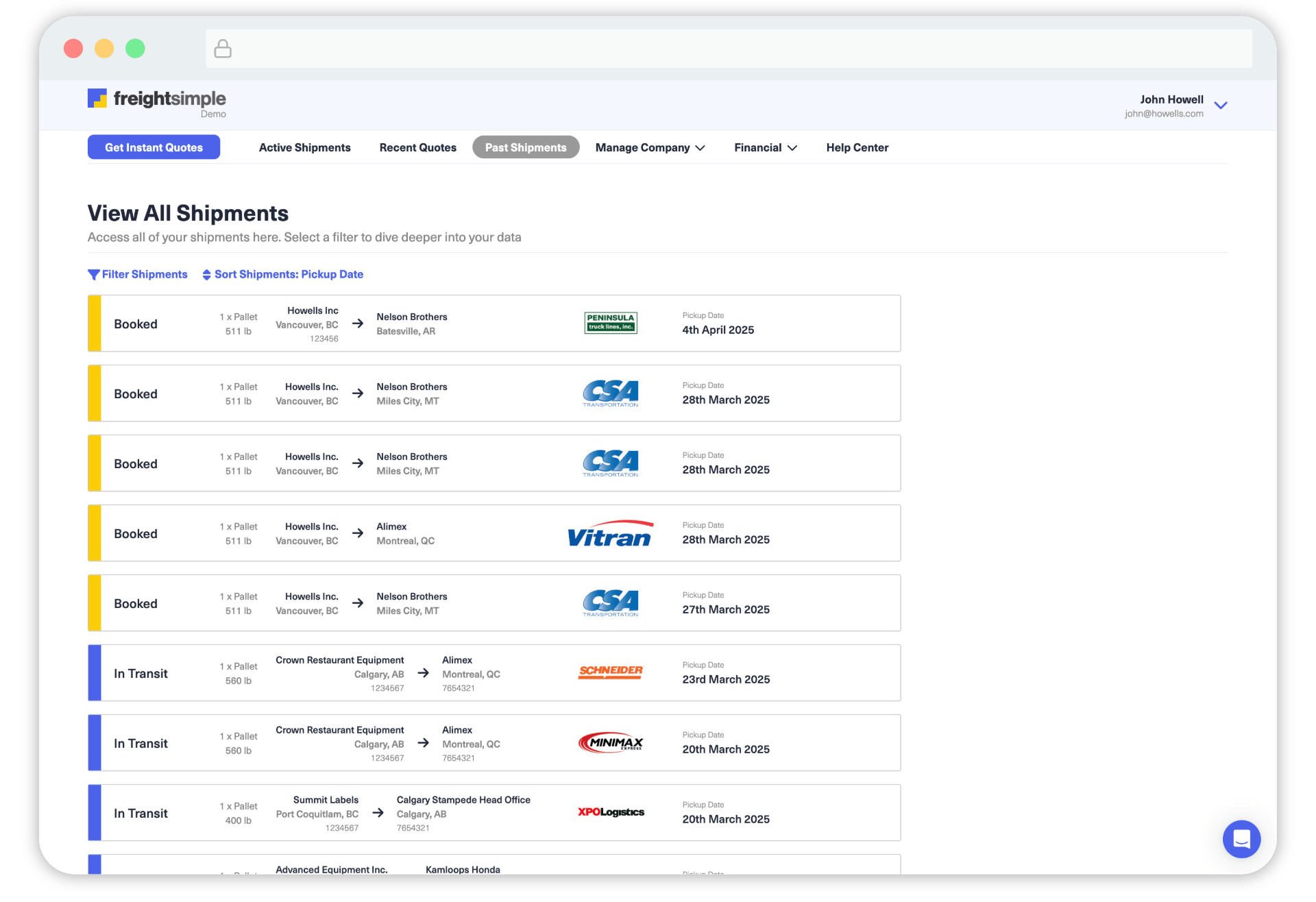
Find the shipment
Once you're in, click on the Past Shipments tab in the top menu. Locate the shipment you want to open a claim for.
-
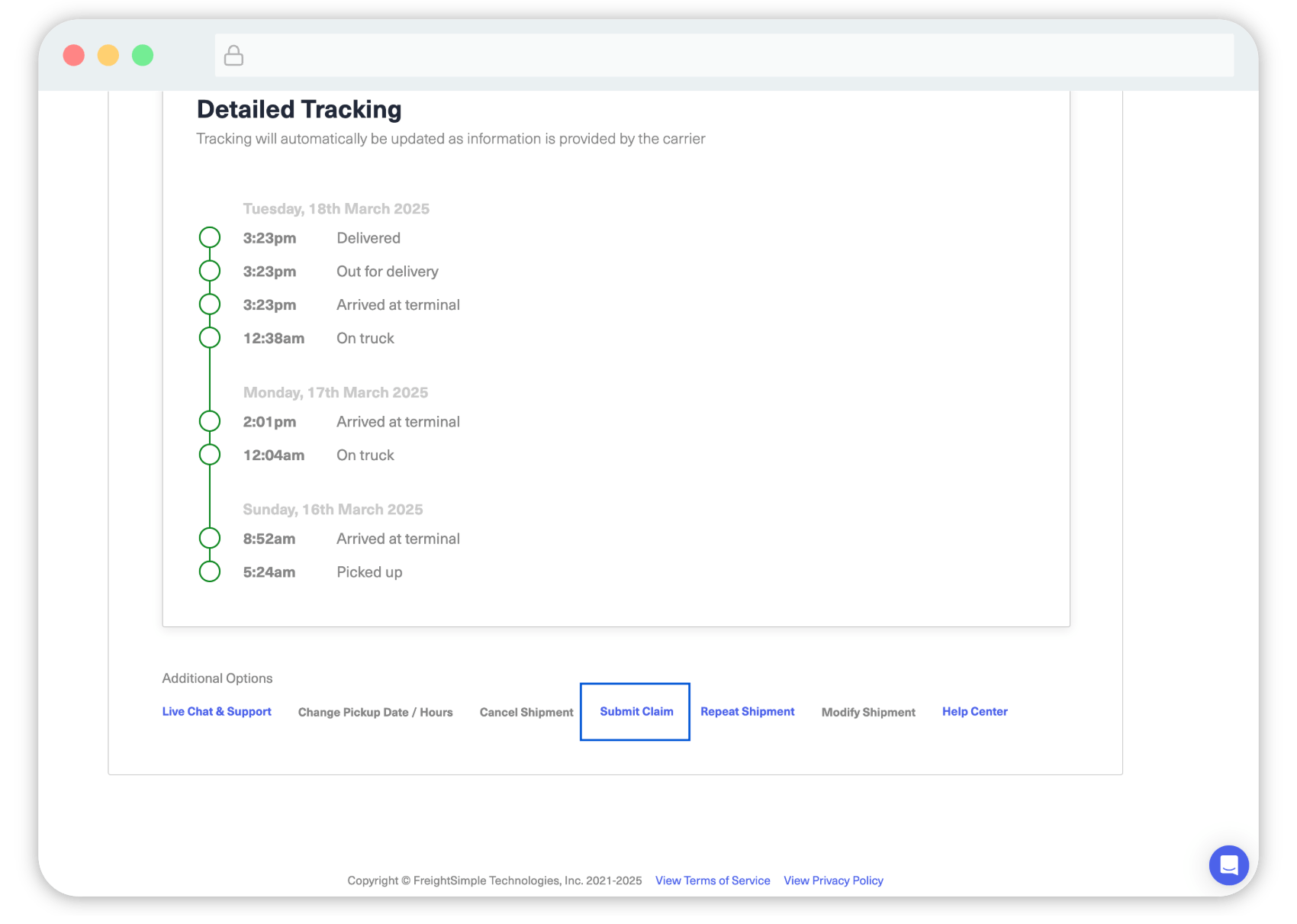
Scroll down to Additional Options
Once you've selected the shipment, scroll to the bottom section of the shipment details.
-
Click on Submit a Claim
Under the Additional Services section, you'll see an option labeled Submit a Claim. Click on it.
-
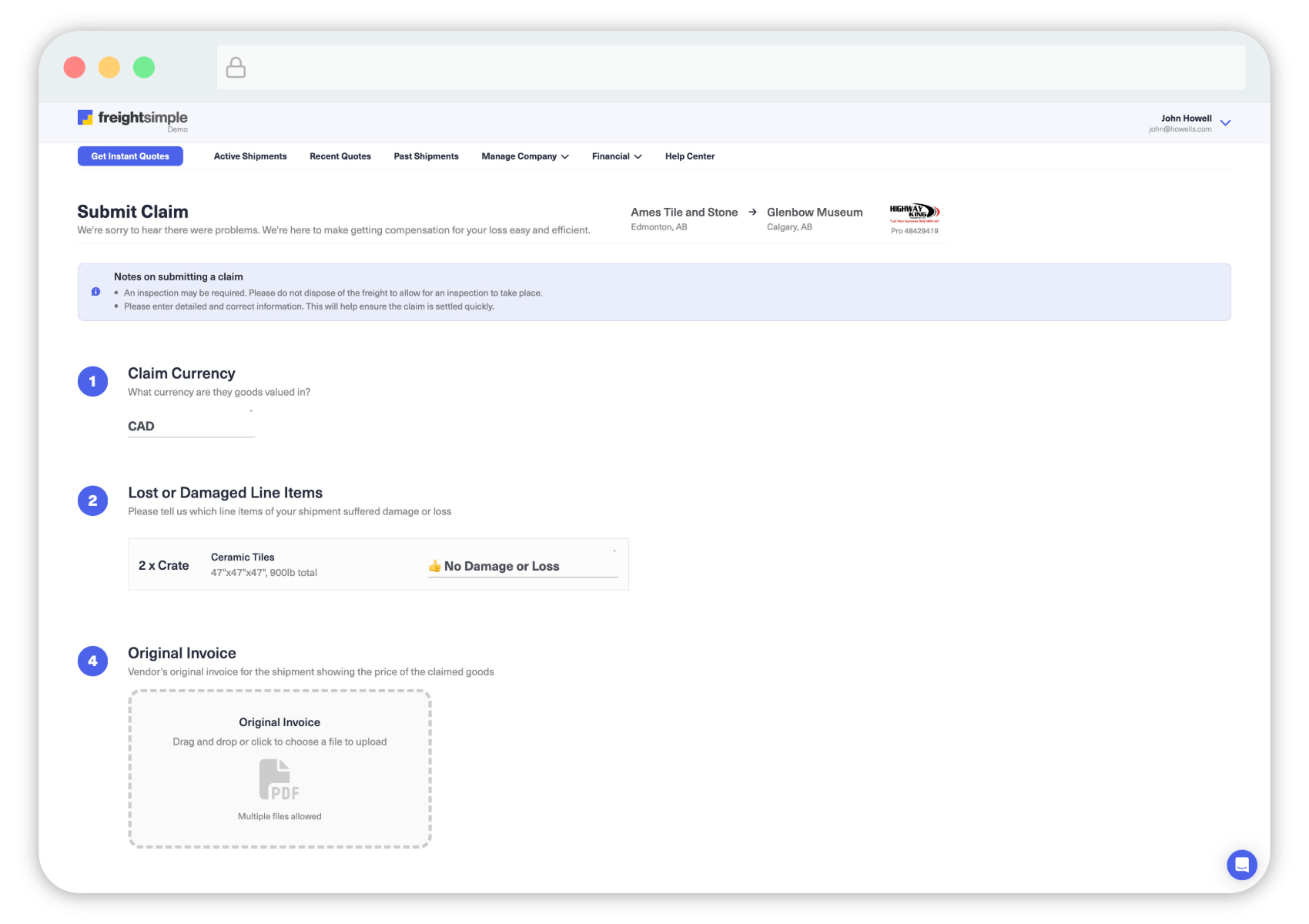
Fill out the claim form
Enter all required information, including:
- Claim type (e.g., damage, shortage, delay)
- Description of the issue
- Supporting documents or images (upload any relevant files)
-
Submit the claim
Once everything is filled out, hit Submit. You'll receive a confirmation, and our team will follow up shortly.
-
Wait for the carrier's response
The carrier has 30 days to acknowledge the claim and 120 days to resolve it. During this period, they may request additional information. FreightSimple keeps in regular communication with the carrier to ensure the claim is being processed and moved forward in a reasonable timeframe.
Please file the claim as soon as you discover the damage, loss, or delay. Notify us in writing so that we can inform the carrier promptly. The notification should include detailed information about the issue.
Supporting documentation
When you submit the formal claim, include all supporting documentation. Make sure to provide:
- Description of the loss, damage, or delay
- Value of the claim
- Photos, receipts, and other supporting documents
- Letter of intent
- Repair invoice or statement from either the manufacturer or reputable third party specialist (on their company letterhead) confirming the item cannot be repaired or the sum to repair the same
Learn more about Insurance, which can protect the value of your freight.