

Transportation modes
In North America, LTL freight moves by truck only, by a combination of truck and rail, or by rail for the long-haul portion. FreightSimple shows you the transportation mode on each quote so you can make the right trade-off between cost, speed, and reliability.
- Truck for pickup and delivery. Regardless of mode, your freight will always be picked up and delivered by truck. Rail is only ever used for the long-haul portion of the journey, never for the first or last mile.
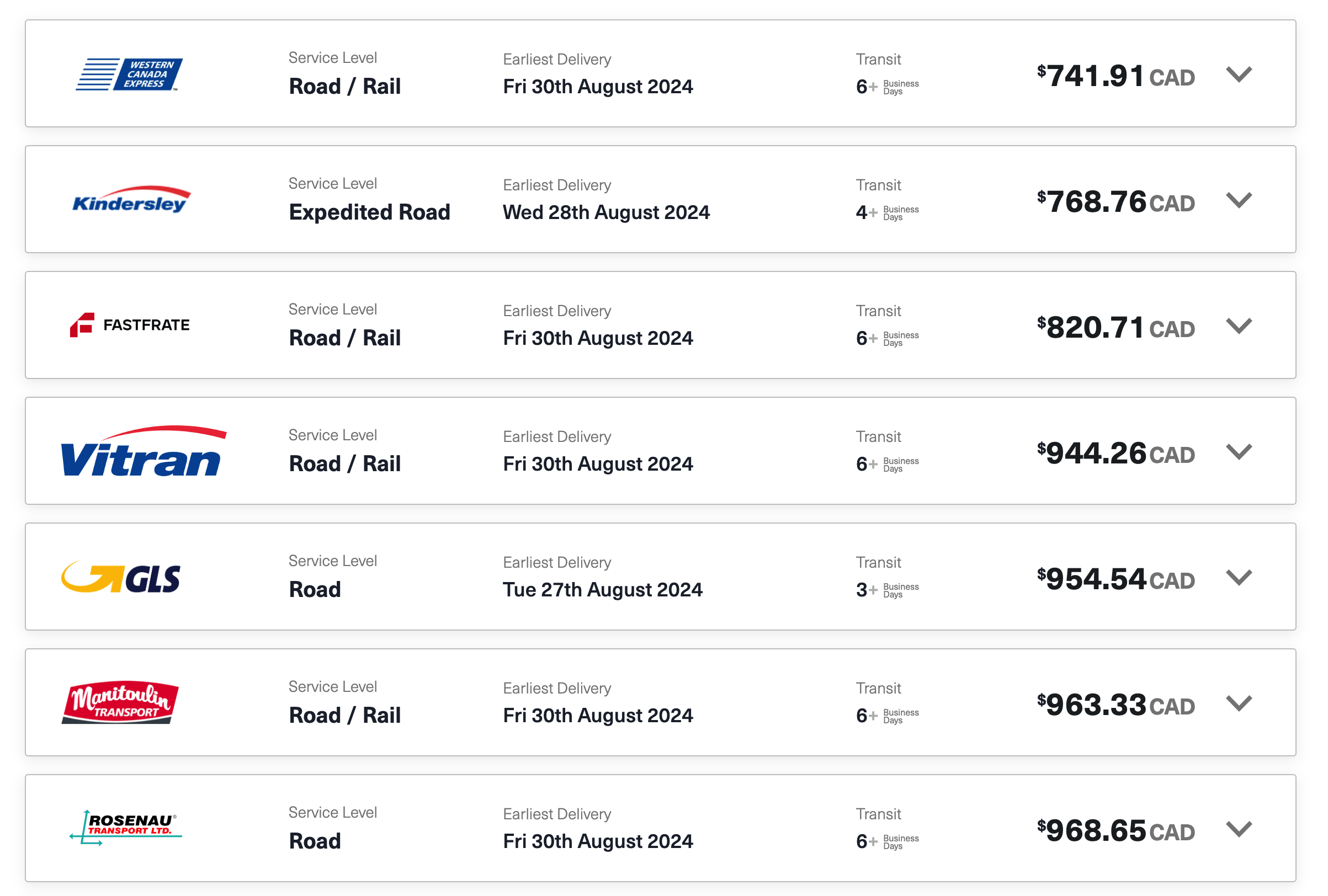
Road
The shipment moves entirely by truck and will not use rail at any point. Road quotes tend to be the fastest and most reliable option, and are the best choice when transit time matters.
Road/Rail
The carrier may use rail for the long-haul portion of the journey, but is not required to. Whether rail is actually used depends on the specific lane and the carrier’s routing at the time of shipment. Road/Rail quotes are typically cheaper than Road-only, and often still competitive on transit time.
Rail
The shipment will use rail for the long-haul portion of the journey. The freight is picked up by truck, handed off to the rail network, then delivered by truck at the destination. Rail is typically the most affordable option, but it is also the slowest and most likely to experience delays. Rail yards are busier than trucking terminals, which also means a slightly higher chance of handling delays or damage.
Choosing the right mode
When comparing quotes across modes, consider:
- Speed and reliability. Road is fastest and most predictable. Rail is slowest and more prone to delays.
- Cost. Rail is typically the cheapest. Road is typically the most expensive.
- Freight sensitivity. If your goods are fragile or time-sensitive, Road or Road/Rail is usually the better choice.
Was this article helpful?
Thanks for letting us know.
What was missing?
Sorry about that. Our team can answer it directly: chat from the dashboard, email support@freightsimple.com, or call +1 (604) 200-2500.
Find who to contact